Vagal Tone: What It Is and How to Actually Improve It

The vagus nerve has become the internet's favorite health hack. It is supposed to fix your anxiety, your sleep, your digestion, and your mood, usually with a gadget that costs a few hundred dollars. That created what we call the Vagus Gadget Trap: spending $300 on a device before spending ten free minutes on the one method that actually has the evidence behind it. Some of the gadget story is real. Most of it is marketing running way ahead of the science.
This page gets you out of the trap. First, what the vagus nerve and vagal tone actually are, in plain English. Then the free methods that have real evidence, starting with the one that works best. Then, one honest step further, where devices fit and where they do not. If you only read one section, read the free methods, because that is where almost all the reliable benefit lives.
What the Vagus Nerve Does
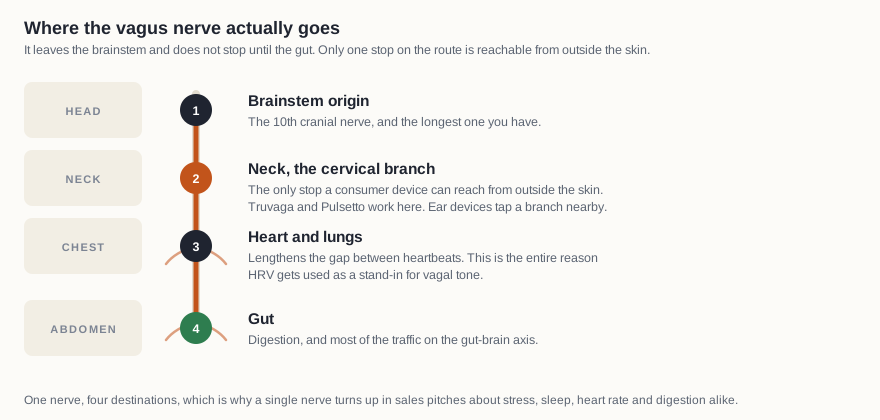
The vagus nerve is the longest nerve of your autonomic nervous system. It runs from your brainstem down through your neck to your heart, lungs, and gut. It is the main wire of the parasympathetic nervous system, the "rest and digest" side that slows your heart, deepens your breathing, and calms you down after a stressor passes.
"Vagal tone" is shorthand for how strong and responsive that calming signal is. High vagal tone means your body brakes hard and recovers fast after stress. Low vagal tone is linked in the research with worse stress resilience, poorer sleep, and higher resting heart rate. You cannot feel your vagal tone directly, which is why people measure it indirectly through heart rate variability. More on that on the HRV page.
The Honest Three-Bucket Summary
Proven (real medicine): Surgically implanted vagus nerve stimulation is FDA-approved for epilepsy and treatment-resistant depression. Non-invasive gammaCore is FDA-cleared for cluster headache and migraine. These are prescription-grade tools for specific diagnoses, not stress gadgets.
Promising but thin (consumer devices): Neck and ear stimulators sold for stress and sleep, like Pulsetto, Neuvana, and Truvaga. Some people feel calmer. The clinical evidence for those specific wellness claims is limited and mixed.
Free and reliable (do this first): Slow breathing, cold exposure, and humming or chanting. Slow breathing in particular has strong, repeatable evidence for raising vagal activity, and it costs nothing.
The full reasoning, with study caveats, is on the evidence page. The short version: if a company tells you their device is clinically proven to lower your stress, ask which clinical trials, on which device, for which outcome. Most of the time the honest answer is "not that specific claim."
Get the free one-page vagal tone protocol
Every free method on one printable sheet: the six-breaths-per-minute pattern, the cold and humming add-ons, the weekly routine, and how to track your progress. This is the whole thing you came for, on one page, for nothing.
Download the free protocol PDFThe Free Methods, Ranked by Evidence
1. Slow breathing (the one that actually works)
Breathe at about six breaths per minute, with your exhale longer than your inhale. A simple version: inhale four seconds, exhale six seconds. Do it for five to ten minutes. This is the most reliable way to raise vagally mediated heart rate variability, and the effect shows up within minutes. The long exhale is the active ingredient, because breathing out is when the vagus nerve slows your heart. Full instructions are on the free methods page.
2. Cold exposure
Cold water on the face or a cold shower triggers the diving reflex, which the vagus nerve drives to slow your heart. It is a real vagal stimulus and a good tool for interrupting a stress spike. If you want to do it properly rather than just gasping under cold water, our sister site covers the actual dose and safety: the cold plunge protocol.
3. Humming, chanting, and long vocal exhales
The vagus nerve connects to the muscles of your voice box and throat. Humming, chanting "om," gargling, and long slow singing all involve a controlled exhale plus vibration in that area. The evidence here is thinner than for breathing, but it is free, pleasant, and pairs naturally with slow breathing. Treat it as a nice add-on, not a headline.
Notice what is not on this list: expensive supplements and most gadgets. The methods with the best evidence are the ones that cost nothing. Start there for a month before you spend a dollar.
Want all of this on one page you can print? Grab the free one-page vagal tone protocol below. No gadget, no cost.
Get the free protocol PDFHow to Measure Progress
You improve what you measure. For vagal tone, the practical proxy is heart rate variability, specifically a metric called RMSSD, which most wearables and free apps can estimate from your morning readings. Rising resting HRV over weeks is a reasonable signal that your recovery is improving. It is noisy day to day, so watch the trend, not the number. The HRV page explains how to read it without fooling yourself.
Where Devices Fit
If you have tried the free methods honestly for a month and want to experiment with a device, that is a fair choice, as long as you go in clear-eyed and avoid the Vagus Gadget Trap of buying first and breathing never. Consumer vagus stimulators are wellness products, not proven treatments for stress or sleep. We keep all device talk one click away from this guide, on its own pages, so the free protocol stays clean:
- Best vagus nerve stimulation devices in 2026, from cheap TENS clips to $499 handhelds, with honest evidence notes
- Pulsetto vs Neuvana, the two consumer brands people compare most
- TENS units for vagus stimulation, the cheap DIY route and its real limits
Safety First
The free breathing methods are safe for almost everyone. Electrical stimulators are not for everyone. If you have a pacemaker or other implant, a heart rhythm problem, a seizure disorder, are pregnant, or have had a carotid procedure, do not use an electrical stimulator without a doctor's say-so. Read the full safety and contraindications page before you buy anything that sends current into your body.
Frequently Asked Questions
- Is vagal tone the same as HRV?
- Not exactly. Vagal tone is the underlying activity of the vagus nerve. HRV is a measurement you can actually take, and vagally mediated HRV (like RMSSD) is the closest practical window into vagal tone. See the HRV page.
- How long until free methods show results?
- Slow breathing changes HRV within a single session. A lasting rise in resting vagal tone takes weeks of near-daily practice. Consistency beats intensity.
- Are the stress-relief devices FDA approved?
- For stress and sleep, generally no. FDA clearances for vagus stimulation cover specific medical conditions like epilepsy, depression, and headache, using specific prescription or cleared devices. Consumer stress gadgets are sold as wellness products. See the evidence page.
- Can I hurt myself doing this?
- Slow breathing is safe. Cold exposure has real rules, read them first. Electrical stimulators have real contraindications, on the safety page.
Start Here
New to this: read the free methods page and do the breathing for a week. Want to track it: set up HRV measurement. Curious about devices: start with the honest device guide, not a brand's sales page. And if you are building a whole recovery routine, cold, light, and sleep all feed the same nervous system: cold plunging, red light recovery, and circadian lighting are the other three pieces we cover.